
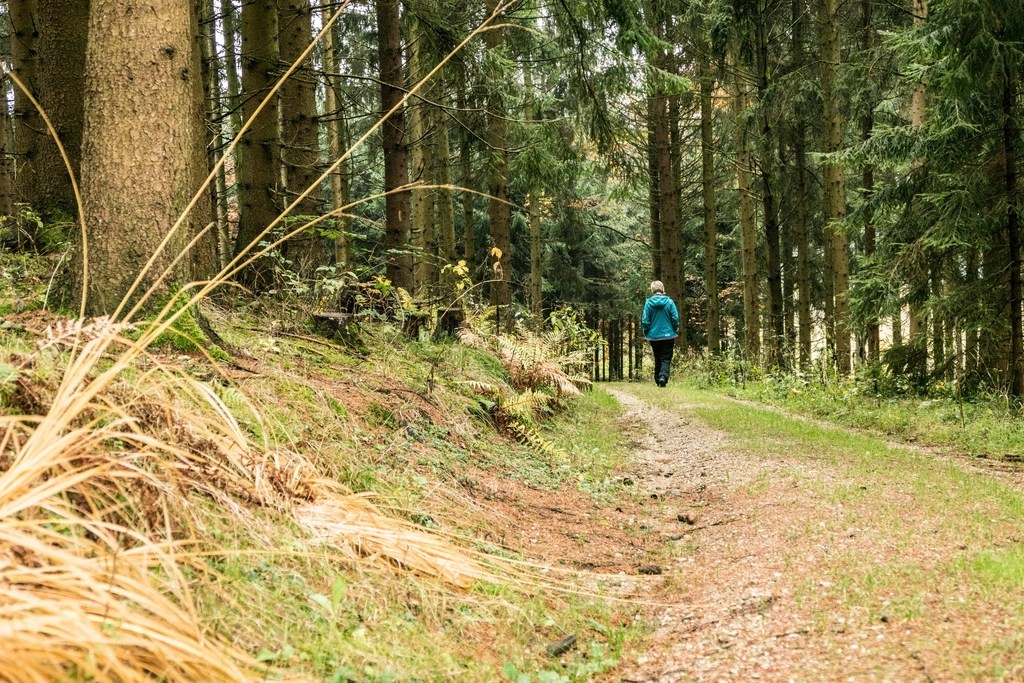
Exploring chapter nine of Goulet & Goulet’s (2014) book Teaching Each Other: Nehinuw Concepts & Indigenous Pedagogies brought forth three core ideas that I want to explore further as I continue through my career as a teacher. In this post, I will explore my connections to going outside, giving back and supporting the whole child as rooted within my reflection of this chapter. Further, I will explore how these ideas connect to my past, present or future teaching and learning.
Go Outside
Goulet and Goulet mention that a critical method to support Indigenous students is to support traditional cultural teachings through land based learning. I connected with the following Cheryl Morin’s excerpt from chapter nine:
“By learning on the land about the land with knowledgeable others, we can improve ourselves by becoming more self-discipline, better informed decision makers, and environmental advocates. We can create our own personal action plans to ensure our future continues to have our ancestors’ cultural and traditional sites intact for generations to come. Knowing our place in the interconnected realm of life also helps us to appreciate the benefits of using the land wisely as we learn to understand the consequences of not keeping our practice or attitudes in harmony with all other living things. (Goulet & Goulet, 2014, p. 183)
From Cheryl’s words, I recognize the importance of learning from the land while on the land. Allowing all students, both Indigenous and non-indigenous students, to embed their learning in experiences and cultural teachings. This method, as echoed by Goulet & Goulet, supports students in developing positive experiences on the land that develop collaboration, independence, consideration and stewardship for the world around them. I appreciate that Cheryl points out how knowledgeable people support the transfer of cultural knowledge which is a major difference between land-based learning and place-based learning (Bowra et al., 2020, p. 133). Going forward in my career, I would like to develop stronger relationships with knowledge keepers in and around my community to help support land based learning opportunities for future students.
I agree with Cheryl’s understanding that land based learning must teach future generations to maintain and nurture ancestral locations so that cultural teachings can remain intact. In western curriculum, the idea of stewardship is placed typically within social studies or science curriculum. I see value in uplifting Indigenous values and ways of knowing to help accomplish mandated curriculum learning targets. Furthermore, contextualizing learning for students and making it relevant by cultural immersion or experiential design encourages success for all students. Going forward, I seek to find further ways to get students out of the classroom and find deep connections with the land and Indigenous histories.
From Cheryl’s excerpt and further discussion by Goulet & Goulet in chapter nine, I was reminded that the land and nature itself can be grounding and healing for students. Allowing for learning on the land to bring forth positive and self-esteem building experiences for students continues to help decolonize learning and focus on growth and strength based instead of deficits (p. 185). The mention of the calming effects of being in nature was highly relatable for myself. I can recall times as a child going out snowmobiling and quadding with my dad. We would ride for a bit and then stop, turn off the machine and just listen for 10-20 minutes. The animals and nature sounds that I experienced in those moments of stillness are memories that I go back to when doing breath work of grounding exercises in my daily life. Thinking holistically about youth development, all learners should have nature “awh” or calm moments that they can later utilize to self-regulate. I sometimes wonder if the materialistic and artificial space where we often situate learning causes higher stress, anxiety and discontentment. I can see that this is an area that I need to do more research in.
Other benefits from land-based learning include experiencing the interconnection between people, place and time (p.190). When we learn from the land, we can hear about moments in time that are contextualized from the place they are being learned at. In my opinion, there is not better way to learn about the past than to have a moment to be immersed or near it. While exploring chapter nine, I was reminded of a reading I did in my undergraduate degree. Chapter ten of Chelsea Vowel’s book: Indigenous Writes: A guide to First Nations, Metis & Inuit Issues In Canada (2016), explores the importance of finding authentic Indigenous stories. I agree with Cheryl Morin’s excerpt from Goulet & Goulet that land-based learning requires those who are sharing knowledge to have a deep and accurate understanding of teachings and Indigenous stories (p.183). Additionally, non-indigenous educators must have a reflective lens when gathering resources and stories to share with students, especially if not directed from a knowledge keeper or elder. I appreciate Vowel’s guiding questions that can support in determining authentic stories from Indigenous communities such as asking which specific group does a story originate from, which specific community was it told in and who in the community was sharing the story (2016, p. 94). When non-indigenous educators are able to answer these questions fully, then the stories that are shared remain accredited to specific groups and keep their context.
Lastly, chapter nine of Goulet & Goulet reminded me that the most memorable and authentic learning occurs in unintended ways. I appreciate Cheryl Morin’s stories about the children mimicking and calling the geese while learning outside (p. 187). Allowing space for students to follow their intuition, interest and curiosity is where beautiful learning occurs. Now that I have experience as a teacher, I strongly believe that more time needs to be spent in undergraduate degrees to help preservice teachers understand that following a mandated curriculum is important but allowing for natural and authentic learning to occur, which may not follow the intended curriculum is okay as well.
Seeking opportunities to authentically learn on and from the land is an area of professional growth that I need to spend more time exploring.
Give Back
As discussed in chapter nine, students benefit from going out into their community and utilizing sweat equity to give back to the community. Place-based learning teaches students about their community while they are immersed in the community (Bowra et al., 2020). The experience of sending students out into the community to give back prepares them for being self-reliant (Goulet & Goulet, 2014, p. 177). Providing a supported space for students to practice independence, responsibility and reliability is a method to safely scaffold the learning experience for these life skills. In our modern world, there appears to be a tendency for youth to be apathetic, or have a defeated attitude towards the lack of control in their life (p. 179). Engaging students in their community allows for them to affect change that impacts their life. Furthermore, service or community work supports students in developing their sense of generosity and independence. Within chapter nine, Bonnie Werner’s stories discuss teenagers out in the community giving back. I wonder how this could apply to a younger age such as the grade fives that I work with. When I return to the classroom I would like to find ways to engage students of any age in volunteerism, giving back and supporting others.
Support The Whole Child
Western pedagogies often focus on supporting students’ academic development as mandated in government curricula. Alternatively, Indigenous pedagogies focus on holistic development and ensuring all aspects of a student are developed and supported. An essential component of this holistic development starts with developing a sense of belonging for students. When students feel that they belong, then they are more likely to attend school. Goulet & Goulet share that if students are not at school and engaged then they will not achieve (p. 176). I also agree that supporting the whole child includes focusing on and celebrating improvement over end goals (p. 176). I have always enjoyed celebrating the small successes that happen with students to encourage motivation and resiliency. Furthermore, providing chances for students to be of value to others through service and knowledge helps to support their sense of self (p. 178).
I appreciate the connections made by Goulet & Goulet to the Circle of Courage (p. 178). I have always found the quadrants of belonging, mastery, independence and generosity are an excellent guide to support the learning process of students. The sequence of learning starts with providing space for students to feel rooted in their community, then challenging them with new skills, allowing them to utilize their skills on their own and finally take those skills to support others and give back. This holistic learning structure allows for students to be immersed and safe in learning. Additionally, as educators, we should want students to not only do well in school but grow up to be healthy and resilient adults (p. 179).
After reading chapter nine, I have a deeper drive to support student holistic development, along with celebrating all growth that occurs while I work with them.
References
Bowra, A., Mashford‐Pringle, A., & Poland, B. (2020). Indigenous learning on Turtle Island: A review of the literature on land‐based learning. The Canadian Geographer / Le Géographe Canadien, 65(2), 132–140. https://doi.org/10.1111/cag.12659
Goulet, L. M., & Goulet, K. N. (2014). Teaching Each Other. UBC Press.
Vowel, C. (2016). Indigenous writes: A guide to First Nations, Métis & Inuit issues in Canada. Highwater Press.
 The Deasent Blog
Want to add to the conversation?