

As I reflected on chapters 3 & 4 of Linda and Keith Goulet’s book Teaching Each Other: Nehinuw Concepts & Indigenous Pedagogies (2014), I continually connected back to the four sections of the model for effective teaching for Indigenous students (p. 87). To help discuss my reflections and connections, the following post is broken up into those four sections: “relationship with the student, relationship amongst students, connection to the process, and connection to the content” (p. 86-87).
Relationship With The Student
Student Background. I have always believed that the most important step in beginning a school year is getting to know your students. Teachers have immense power when they truly know a student and can utilize that relationship to support the design and implementation of learning opportunities. This knowledge helps to engage and encourage students through the learning tasks and challenges of the year. In the past, I have tried to get to know students and their backgrounds. Inspired by chapter three, Goulet & Goulet sparked an understanding that learning about the cultural background of a child is not only important for a clear picture of the student, but is essential for their development (p. 47). Furthermore, this chapter added to my understanding that elders hold a wealth of knowledge by stating that they are essential for shaping student, “identity through language and culture” (p. 50). When I return to the classroom, I would like to find and engage in opportunities to learn and engage with elders and their teachings in informal ways. I know that this will not only support my relationships with Indigenous students, but all students.
Belonging. During our live class on September 18th, I was reminded that developing a relationship with students is synonymous with developing the students’ sense of belonging. As we created steps to teach an animal to swim, I recognized that while teachers often think we need to fully customize learning for each student or animal, there are good teaching practices to support all students. After using general teaching strategies, we can scaffold learning for students to bridge learning gaps. Through this exercise, I realized that although each group had different animals, we all recognized that the first step to supporting an animal to swim was helping them to feel safe or that they belonged near the body of water. The same teaching can be translated into learning for humans. It is essential that learners feel comfortable and that they belong to fully engage and embrace the learning opportunities.
Discussing student belonging reminds me of a TED talk by Rita Pierson that I first watched during one of my undergrad classes. Within this video, Rita talks about how students don’t learn from people whom they feel don’t like them (Pierson, 2013, 1:37). She is correct. A major part of having a student belong in a classroom revolves around how the teacher treats them. As an adult who supports and uplifts all students in the classroom, the space becomes safer, which supports student belonging. Within Rita’s 7-minute TED talk below, she shares various ways to develop a relationship with students and help them find their place within the classroom.
(Pierson, 2013)
Classroom Environment. From my perspective, chapter four reinforced that teachers are responsible for creating and maintaining a classroom environment that is welcoming to all students and their backgrounds (p. 80). This includes not only the physical space, but also how learning occurs. As mentioned by Goulet and Goulet, this includes how teachers teach based on the classroom composition and the students (p. 82-83). Structuring and running a classroom that recognizes and utilizes students’ gifts while helping them develop their whole selves ensures that students feel empowered to learn and reinforces the idea that students are valued within the learning space. In the past, I worked with a couple of colleagues, in the same school division, to take the grade five social studies curriculum and organize the indicators as a timeline of Turtle Island or Canada’s history. While this project was a large undertaking, I now have a social studies curriculum that contains more content and learning opportunities than I can complete in a school year. This large base of learning opportunities allows for easier customization of the program for my students based on what they are interested in or areas that they require more practice in. Having a base for teaching the grade five social studies curriculum has changed how I teach social studies. I am always adding alternative ways to engage with Indigenous histories of Turtle Island and settler histories of Canada. In the future, I plan to spend more time creating a large curriculum base to support the customization of learning for my current students each year.
Professionalism. I am intrigued by the notion of Goulet and Goulet’s relationship with students that shows genuine care for them. A rich relationship that revolves around care is possible when teachers step outside of their professional title and allow students to get to know them as humans (p. 89). In Saskatchewan, I can predict backlash from more conservative teachers with reference to our roles and code of conduct as dictated by the Saskatchewan Professional Teachers Regulatory Board (STPRB, n.d.). Within this code of conduct, teachers are instructed to “maintain appropriate communication and professional relationships with learners, parents, guardians, colleagues, and other stakeholders” (p. 2). From the wording of this passage, I recognize that some teachers may feel that allowing students to get to know them could be viewed as unprofessional. As a professional, I believe that teachers can open themselves up to students about their interests, curiosities, or even their own life experiences if it serves a purpose to build a bond, teach a lesson, or help to empathize with a child. One of my favourite parts of being a teacher is realizing that a student who you get the privilege to teach every day is interested in something that you enjoy. Most recently, I think of a strong relationship that I built with a student about Harry Potter. Those small conversations about a common interest helped me to get that student back engaged in our learning tasks or to push through a hard task when needed. Opening yourself up to students can be done while remaining in a professional role when teachers utilize informal discussions within the classroom.
Relationships Among Students
I strive as an educator to find ways for students to become more reliant on their own knowledge, their peers’ knowledge, and the power of teamwork over the traditional knowledge of myself as a teacher. Primarily, this belief comes from the understanding that students often have knowledge about different topics that I am unaware of. By structuring classroom opportunities that focus on group work, students are placed in a position to rely on one another and their own abilities. Goulet & Goulet reinforced the power of group work by stating their power in teaching and practicing social skills such as listening, sharing, and taking turns (p. 90), which are essential for a successful professional and personal life.
Within my classroom, I utilize group work as often as I can. One of my favourite ways to encourage students to develop bonds amongst their peers is to create Science, Technology, Engineering, Art, and Math (STEAM) tasks that connect to a curricular area. I typically have students utilize project time at the end of most school days, within my grade 5 class, to work together on an open-ended inquiry task related to something in our curriculum. One of my favourites is having students create a cardboard ‘gingerbread house’ as a major winter holiday task. Students learn about the history of gingerbread houses during a story as we discuss winter holiday traditions. Next, they work in small groups to design a building structure that could be made out of gingerbread. Last year, we had students create everything from a Santa’s workshop to an apartment building, and even a hockey arena. Students explore measurement, art, structures, and a simple machine such as a pulley. The creativity was amazing! As fun and engaging as this task was, students were working on challenging learning tasks that I had not taught yet, but in a way where they had to rely on one another, practice specific research questions, and collaborate. When I return to the classroom, I intend to develop more group work learning tasks, such as the cardboard gingerbread house, to help my students practice teaching one another through engaging hands-on experiences.
Connection To the Process
Language. I was intrigued that Goulet & Goulet mentioned that lots of meaning is lost through translation from Cree to English (p. 56). From reading chapter 3, I understand that the English language does not properly represent the life force that is described in the Nehiew language. The life force concept is interesting to me. I find the Nehiew language beautiful, complex, and overwhelming.
Going forward, I plan to seek authentic opportunities to incorporate Cree language within my classroom. From Goulet & Goulet’s reminder that language is an important piece of cultural survival as well as the human experience (p. 56-57). I realize how important it is to incorporate Indigenous languages in meaningful ways. Reflecting on my practice, this is an area that I must work on. I have seen a colleague utilize a French class as a way to compare English, French, Cree, and Michif languages. I want to spend some time to see how I can do this in other subject areas.
Types of Learning. I resonated with Goulet & Goulet’s emphasis on different types of education as equal and effective. Reflecting on my teaching experience, I have utilized all three types of education mentioned: teaching oneself, teaching another, and teaching each other. As a lifelong learner myself, I appreciate the value placed on “kiskinaumasowin (teaching oneself) (p. 65). Utilizing strong relationships with students and among students allows a teacher to create learning opportunities where students can use their own talents and abilities to teach themself. From my recent classroom experience, I relate this type of education to my wonder wall and encouraging students to ask questions, and then teaching methods to help students find their own answers. When students feel that they have knowledge to share, they can participate in kiskinaumagehin (teaching another) (p. 65). My settler brain immediately thinks of presentations and projects that allow students to share their knowledge with others. From Goulet & Goulet’s discussion of teaching others, I realize that I need to work on finding authentic ways to release control of the instruction within a classroom and support the development of student gifts so they may share them with their classmates.
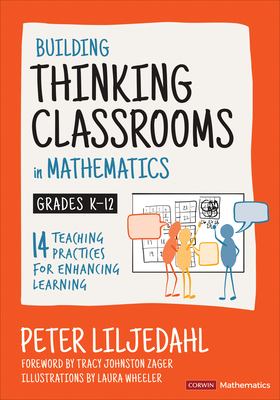
As mentioned previously, I am a big fan of hands-on learning. While reading about kiskinaumatowin (teaching each other) (p. 65), I immediately connected to the power of working in groups and relying on one another. A strategy that I connect to kiskinaumatowin is the Thinking Classroom created by Peter Liljedahl (2021). I have been exploring this collaborative learning method within all areas of my grade 5 curriculum. I introduced the Thinking Classroom through my math learning tasks. I appreciate that within this method, all students are provided with a voice, a role, and value. Requiring students to change up who is in charge of sharing and listening allows all students to be able to bring forth knowledge that they can teach to their peers. I would like to continue to explore how I can use this strategy to support students as they teach one another.
Case Study. From our case study activity in class, my group was focused on the connection to process. We discussed how, to engage students in learning and get them to buy in, you needed to get to know them first and establish a positive learning community with relationships among students before you focused on academic learning. The idea that students need to attend school to belong and therefore learn came up. I relate back to my teaching experience in the past with a group of students who needed to feel safe and that they belonged before they would show up to school consistently, let alone be functioning and positive members of the classroom. We discussed that in this case study with grade nine students that perhaps a swap in how the block system worked could focus on themes such as respect, love, trust etc. to provide learning opportunities that covered content, but do so in a land-based, life skills way. This would ensure that no matter what, those students who attended would leave with essential skills and knowledge to help themselves tackle and be prepared for grade 10, whether at this particular school or another. Our group also spoke about structuring learning that was more classroom-based in the mornings or a few times a week, but planned learning opportunities within the community to connect students to their learning. In turn, we discussed that students would be more inclined to complete and participate in curricular work this way. We discussed eliminating fluff and teaching the essentials of the SK curriculum.
The discussion around removing the fluff or busy work of learning in public school is an area that I would like to continue to work on in my practice. I know that this is possible as I have done so with a curriculum in a time when a student may need a reduced workload or their individualized learning plan focuses on covering the basics of each curriculum area. I can see that all students, not just indigenous students, would benefit from reducing the busy work in classrooms and replacing it with authentic, engaging, and hands-on learning.
Connection To The Content
Contextualized Learning. As an educator, I have witnessed students become passionate about mundane learning topics, such as perimeter and area, when presented in a manner that transfers their learning to life outside of school. One of my favourite learning tasks that I have adapted from grades 3-6 is having students create a geometry city. Based on the shapes and spaces outcomes in the particular grade, I have students utilize their mathematical skills to design and create a city. From this project, I recognize that students can see how their mathematical concepts are of value in their lives outside of school. These learning projects, where students develop skills as they work through a larger project, allow for their learning to be contextualized and more valuable than simply completing a worksheet. I recognize that the example above is simplistic regarding contextualizing learning. From our class text, I am reminded that teachers must ensure that learning occurs in culturally relevant ways to support relatability to students’ lives (Goulet & Goulet, p.94). After reading chapter four, I recognize that I could take a step further in this learning task. Students can physically explore the local community and create a structure or city based on something they see of value or connect with.
Concern. As I discuss integrating and authentically supporting Indigenous student and their connection to content, I recognize the frequent hesitation that I have with regard to incorporating Indigenous content. As a white, middle-class woman in an educator role, I frequently am concerned that I will not represent the materials appropriately or offend someone. I recognize that making mistakes and learning from them is a part of my job of reconciliation; however, this hesitation is an essential part of my journey in connecting students to culturally based content. From reading through chapters 3 and 4 of Linda and Keith Goulet’s book, I recognize that relationships with others will help me work through my hesitations. Our school division has a fantastic Indigenous Lead who helps to bring culturally relevant resources and guests into our schools. I have a good relationship with this person, and I know that as long as I am open to building and maintaining relationships with those whom I meet on my educational journey, I will always move forward even if I have a few missteps along the way.
References
Goulet, L. M., & Goulet, K. N. (2014). Teaching Each Other. UBC Press.
Liljedahl, P. (2021). Building thinking classrooms in mathematics, grades K-12: 14 teaching practices for enhancing learning. Sage Publications Inc.
Pierson, R. (2013). Every kid needs a champion. Ted.com; TED Talks. https://www.ted.com/talks/rita_pierson_every_kid_needs_a_champion
STPRB. (n.d.). Standards of Professional Conduct. Saskatchewan Professional Teachers Regulatory Board. https://sptrb.ca/SPTRB/SPTRB/Professional_Standards/Standards_of_Professional_Conduct_and_Competence/Standards_of_Professional_Conduct.aspx


Want to add to the conversation?